
News Releases Make Companies More Findable in the AI Age
For years, news releases were treated as tactical tools. Companies issued them when a product was launched, an acquisition occurred or a leadership change was made. Then social media took center stage. Then SEO. Then content marketing.
Now we’re entering a new era of AI-driven search.
Platforms like ChatGPT, Claude and other large language models are changing how information is discovered, summarized and cited. Instead of returning a list of links, AI search engines synthesize information from trusted, structured sources. That shift is quietly making the traditional news release more powerful than ever.
Why? Because AI search engines prefer structured and authoritative content that is factual, attributable and published on credible website domains. A well-written news release accomplishes that.
My colleague and friend Jason Tews says: “There’s no shortcut to showing up in AI search. The companies that appear are the ones that are already well-documented across trusted sources such as news coverage, industry publications and authoritative websites. AI visibility is really just a reflection of real-world credibility.”
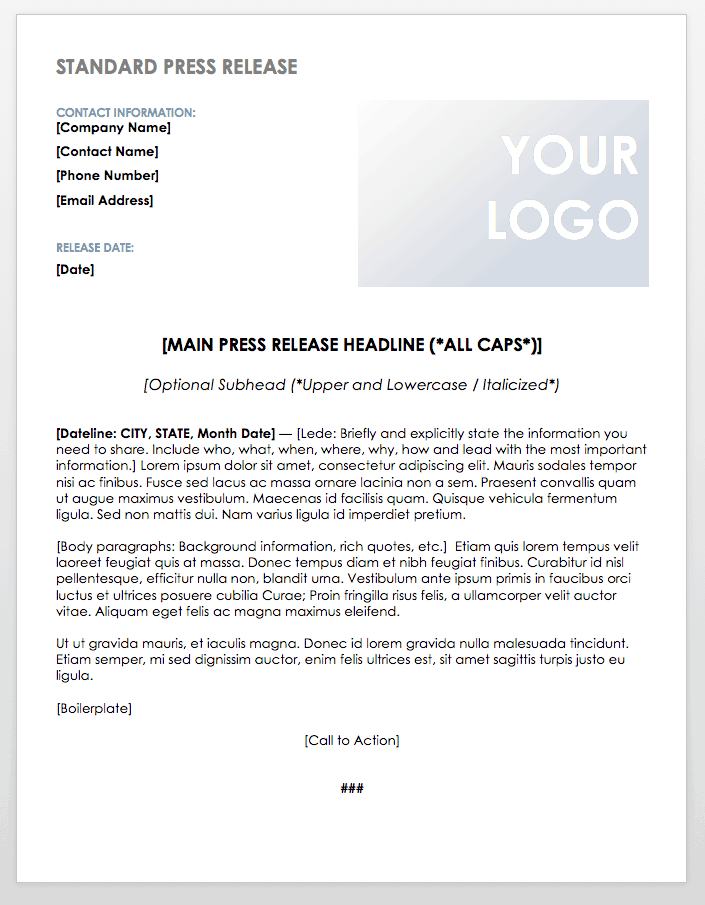
That credibility can come from news announcements, blogs and articles. How is a release different from a blog post? Blogs can be casual or conversational whereas a news release is formatted in a predictable structure with a headline, subhead, dateline, quotes and a boilerplate. That structure makes it easier for AI systems to extract key information about your company, leadership, milestones, industry focus and geographic footprint.\
When a company announces a major contract, plant expansion or revenue milestone in a distributed release, that information becomes part of the searchable knowledge ecosystem. That’s important in the AI stratosphere.
Tews, who wears many marketing hats including fractional chief marketing officer, says: “Press coverage and third-party mentions matter more than ever because large language models prioritize trusted sources. If your company isn’t being written about externally, you’re far less likely to show up when someone asks AI tools for recommendations.”
Distribution Creates Digital Permanence
AI engines weigh domain authority and distribution footprint so only putting a news release on the company website may be shortsighted. When a release appears across multiple trusted outlets, it multiplies your digital presence, which creates greater legitimacy.
And this is where distribution platforms matter.
Some news distribution services allow backlinks that disappear after a few months. That means the SEO equity fades. So it’s important to use a news service where backlinks embedded in releases do not expire. The content remains archived and accessible, preserving both visibility and link authority over time.
In an AI search environment, longevity equals leverage.
Every permanent backlink strengthens your company’s digital footprint, especially for AI models trained on web data.
Strategic Optimization\
AI models prioritize clarity and emphasis. You can help them by formatting releases intentionally. For example:
1) Bold your company name
2) Bold your primary industry keywords\
3) Bold important phrases like advanced manufacturing, supply chain optimization or Series B funding
4) Bold geographic identifiers like Chicago-based manufacturer
When AI parses content, structural cues are important. Bolding key terms helps define topical authority. It reinforces what a company wants to be known for. Basically, it’s helping guide AI.
Backlinks Are More Than SEO Tools
Backlinks are hyperlinks from other websites that point to your own. Backlinks used to be purely an SEO game. Today, they serve a broader function.
They create an association between a company and key industry terms. They also connect the news release to deeper content, such as white papers, product pages and case studies. Backlinks reinforce authority signals across the web.
When AI engines evaluate your company, they look at contextual relationships. If a news release links to a detailed page on robotic automation systems, and that page is consistently linked across multiple releases, you are building a semantic cluster around that expertise.
That cluster strengthens how AI categorizes your company.
Not all backlinks are created equal. Some links disappear after 90 days. Permanent backlinks create sustained authority, and in an AI-driven search landscape, permanence compounds.
News Releases Feed AI Knowledge Panels
Think about how executives and companies now appear in AI answers:
“Who is the CEO of…”, “What does this company specialize in?”, “Where is this manufacturer headquartered?”, “When did they open their new facility?”
The answers to those questions typically come from structured news releases.
AI systems are more likely to associate a CEO who is quoted consistently in news releases as an individual with thought leadership and industry expertise.
News releases build digital biography trails. That’s one reason frequency matters. Two to four news releases per year may not be enough in today’s world. Recentness and density matter.
Tews agrees. “Recency is becoming a bigger factor with newer AI models,” he said. “Companies that consistently publish news releases, blogs or bylined articles are more likely to stay visible in AI-generated results.” Read more from Jason Tews.
A few comments I’ve heard from companies.
But we’ve got nothing to write about? Our customers already know who we are. It costs too much to distribute news releases.
Easy Topics To Brag About
Employee successes
Quarterly corporate performance updates
Major customer wins
Leadership insights tied to industry trends
Workforce expansion announcements
Strategic partnerships
Community or regional investments
Philanthropic accomplishments
Industry and community awards
New Board Committees
Each release becomes another data point in the AI ecosystem. Over time, that builds a machine-readable story about the company and where it’s going. Costs can range from $1,000-$5,000 depending on the wire service and the add-ons such as using a corporate logo or a picture or targeting a specific influencer list.
The Strategic Shift
For years, companies asked, “Will a journalist pick this up?” That’s still important. But the better question today is, “How will AI understand us?”
That hurts this former journalist, but it’s true.
News releases are media tools, but they also are structured data assets. They shape how AI search engines describe a company to customers, investors, recruits and partners
In a world where AI increasingly answers questions before users click a link, companies must ensure that the source material is accurate, optimized and permanent.
AI search is not replacing public relations, but it is making disciplined PR more valuable than ever.